Most concrete dries within 24 to 48 hours for walking and light use. It continues to harden over time, reaching full strength in about 28 days. After a week, concrete is strong enough for small vehicles, but the complete curing process is slower and depends on several important factors.
Many wonder: how long does it take concrete to dry? Many factors come into play, from temperature to moisture levels. This guide will walk you through each stage of the drying process, especially how it applies to Bellevue, NE’s climate and construction needs.
Understanding Concrete Curing: What It Is and Why It Matters
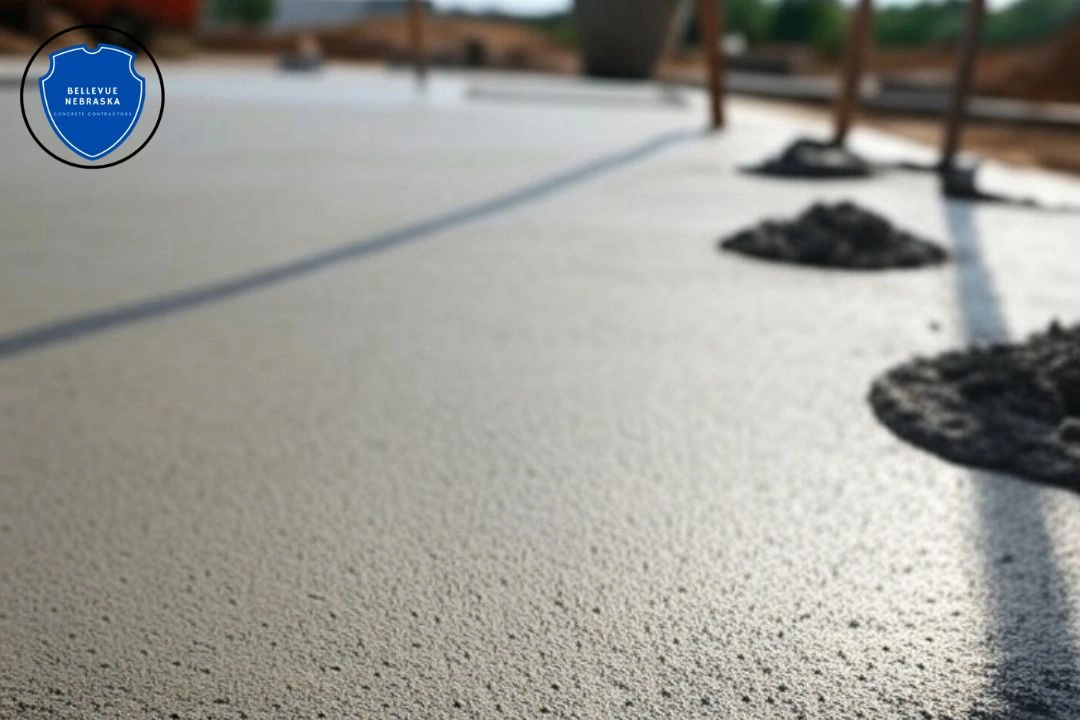
Concrete curing is a crucial process that allows the material to develop its full strength and durability. It involves controlling moisture and temperature conditions after the mixture is placed to ensure proper hydration. Without adequate curing, the cement surface can dry too quickly, which may cause cracking and reduce its long-term performance. Two common curing methods help maintain the necessary moisture levels:
- Water Curing: This technique involves keeping the paving surface continuously wet through methods such as spraying, sprinkling, or covering with wet materials like burlap or plastic sheeting. Water curing supports the hydration process, resulting in more durable pavement.
- Membrane Curing: This method uses curing compounds applied to the concrete surface to form a protective barrier. The barrier reduces moisture loss by preventing evaporation, making it an ideal option when continuous water application is not feasible.
How Concrete Cures and Gains Strength
Concrete hardens through a chemical reaction known as hydration, where water combines with cement to form solid crystals. This process binds the aggregate materials, gradually increasing strength and durability. Maintaining proper moisture and temperature during this phase is critical to achieving optimal results.
Although slab may feel firm within a day or two, full strength typically develops over 28 days. Environmental factors and curing techniques can significantly impact the hardening rate. Ensuring appropriate conditions throughout the curing period helps prevent cracking and guarantees long-lasting performance.
How Long Does Concrete Take to Dry
Concrete drying is a gradual process that occurs in stages. While it may seem dry on the surface early on, achieving full strength takes more time. Understanding each stage helps you plan the next steps safely and effectively.
- 24 to 48 hours: Cement mixture is typically dry enough for foot traffic and light use within 24 to 48 hours. During this time, avoid placing heavy loads or equipment on the surface to prevent damage.
- 7 days: After one week, the paving mixture has usually reached about 70% of its full strength. It can handle light vehicle traffic, but continued curing is essential to avoid surface cracking or internal weakness.
- 28 days: The cement surface is considered fully cured after 28 days. At this point, it has reached its maximum strength and durability. It is the standard curing period for most residential and commercial projects.
Here is a detailed timeline of concrete curing:
| Time Frame | Approximate Strength Gained |
|---|---|
| 10 Hours | ~5% |
| 24 Hours | ~15% |
| 48 Hours | ~25% |
| 72 Hours | ~40% |
| 1 Week | ~70% |
| 2 Weeks | ~90% |
| 28 Days | ~99% (Fully Cured) |
Bellevue, NE specific Adjustments
Concrete drying times in Bellevue, NE, can be influenced by the region’s seasonal weather patterns. The area experiences hot summers, cold winters, and occasional humidity, all of which affect how the mixture cures.
In the summer, high temperatures can cause the surface to dry too quickly, leading to potential concrete driveway cracking. However, it’s crucial to keep the surface moist using water curing or applying curing compounds to retain moisture.
During cold seasons, curing slows down due to low temperatures. If pouring in fall or winter, pavement should be protected with insulating blankets or heated enclosures to ensure proper strength development.
Additionally, spring and fall in Bellevue may bring fluctuating temperatures and wind, speeding up evaporation. In these cases, monitoring wind conditions and covering the surface during curing can help maintain ideal moisture levels.
Factors That Impact Concrete Setting Duration
A concrete driveway does not dry at a fixed rate. Several factors influence how quickly or slowly it sets and cures. Understanding these variables is essential for planning timelines, ensuring proper curing, and preventing structural issues. Each of the following conditions can directly affect the final quality and strength of the surface.
Moisture
Moisture plays a critical role in the hydration process of the cement surface. Excessive water in the mix can extend drying time and weaken the final product. Insufficient humidity, especially during curing, may lead to surface cracking. Maintaining balanced moisture levels throughout the curing phase ensures consistent strength development and helps prevent early-age defects in the slab.
Temperature Fluctuation
Temperature has a direct impact on setting time. Warm temperatures accelerate hydration, while cold conditions slow the process. Inconsistent temperatures can cause uneven curing and result in defects or reduced strength. Using temperature control measures, such as insulation or shading, helps maintain stability during curing and supports consistent strength gain throughout the slab.
Mixture Type
The composition of the cement mixture influences the setting speed. Mixes with high cement content or special additives may cure faster, while those with added retarders take longer. The choice of aggregate and water-to-cement ratio also plays a role. Selecting the appropriate mix for project conditions helps control curing time and ensures long-term performance and durability.
Wind Condition
Wind can cause rapid evaporation of surface moisture, leading to uneven curing and potential cracking. High winds accelerate water loss before the surface is fully set, compromising surface integrity. Using windbreaks and covers or applying curing compounds can help reduce moisture loss. Managing wind exposure is essential for consistent surface finish and long-term structural quality.
Concrete Thickness
Thicker layer sections take longer to dry due to the greater volume of material retaining moisture. Thin slabs may appear dry while the deeper layers remain unset. Proper curing techniques must be maintained throughout the depth to avoid internal weakness. Accounting for thickness in scheduling and curing plans helps ensure uniform drying and overall strength.
Tricks to Speed Up the Drying Process
Speeding up the mixture drying requires careful adjustments that do not compromise strength. BellevueNebraskaConcreteContractors suggests these proven methods to manage time effectively while maintaining the integrity of the finished surface.
- Apply curing compounds to retain internal moisture and support faster, even curing.
- Do it during warmer months, as higher temperatures naturally accelerate the setting process.
- Use water for curing by applying it regularly to keep the surface hydrated and prevent early drying.
- Ensure the slab is covered during curing to protect it from wind, sun exposure, and temperature changes that can delay the process.
Conclusion
Concrete curing is a gradual process that requires patience and proper care. The surface may appear dry early, but true strength develops over time. Knowing the complete curing timeline ensures your project avoids cracking, scaling, or other long-term issues caused by premature use or exposure.
If you need expert concrete services in Bellevue, NE, our team is ready to help. We combine proven techniques with local experience to ensure your project is completed on time and built to last. Visit us to learn more about how we deliver quality work with precision and care.
Frequently Asked Questions
What happens if the concrete dries too fast?
If the pavement dries too quickly, it may crack, weaken, or develop surface defects. Proper curing ensures gradual moisture loss, which is essential for long-term strength and structural integrity.
Can rain damage freshly poured concrete?
Rain during the first few hours can wash away cement, weaken the surface, or ruin the finish. Protect the fresh surface with covers if rain is expected.
What temperature is best for curing?
The ideal curing temperature is between 50°F and 70°F. Extreme heat or cold can interfere with curing, so protection may be necessary to ensure consistent strength development.
Can I use a curing compound instead of water?
Curing compounds form a protective film that retains moisture. They’re convenient, especially in large areas where frequent water curing is impractical or inconsistent.
Does the color change during curing?
Concrete often appears darker when wet and lightens as it cures. Discoloration may also occur from uneven curing, water exposure, or finishing techniques.